THINK ABOUTIT’S ALIEN TYPE SUMMARY – Arian
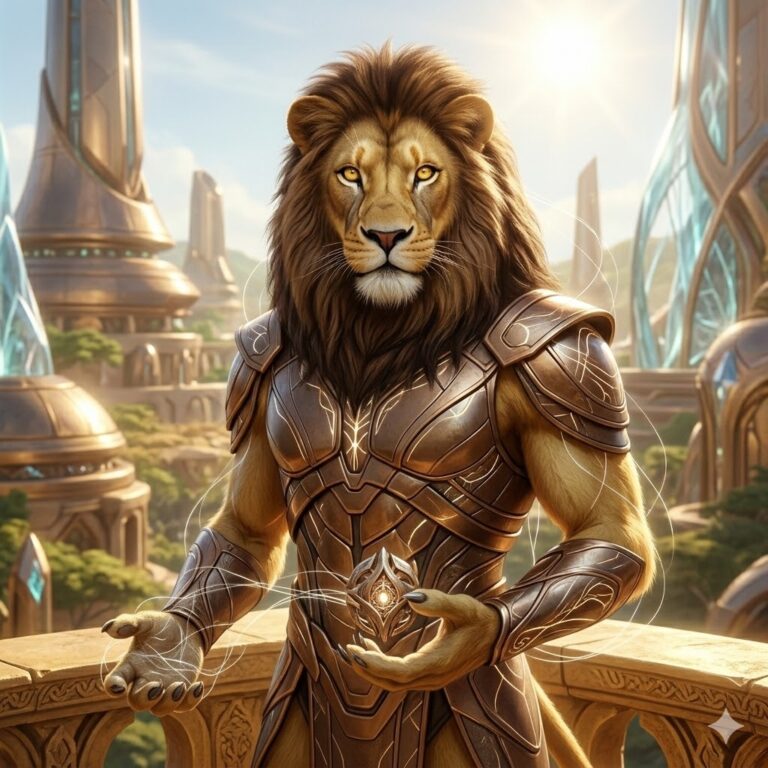
The Arians represent a significant humanoid civilization residing on the planet Arian, which orbits the giant star Aldebaran (Alpha Tauri). Standing between 2 and 3 meters tall, these beings are noted for their striking physical appearance—often featuring hair in shades of brown, red, or even blue—and their profound historical connection to Earth. According to contactee reports, the Arians were present on our planet millions of years ago, specifically during the era of the Atlantis civilization and the cataclysmic asteroid impact 65 million years ago. Their mission is often described as educational and protective, offering chosen individuals insights into universal history and advanced spiritual science. As residents of a system 65 light-years away, the Arians serve as a bridge between Earth’s ancient past and our future potential among the stars.
Name: Arian
AKA: Aldebarans, People of Raula, The Tall Ones of Glowe.
Location – Home System: Arian allegedly is the name of a planet that circles Aldebaran (Alpha Tauri), and that’s inhabited by a humanoid civilization. Arian would be the 4th planet circling Aldebaran. Older estimates situate it approx. 60 LY away, which is in line with the 59 LY Martin Wiesengrün mentions. Note that there are – thus far unconfirmed reports – of a possible brown dwarf companion, in which case Aldebaran would be a binary system. Allegedly the natives call their sun Raula. Arian’s orbit around it would take approx. 20.2 earth years to complete.
Distance from Earth: 65.1 Light Years away.
Attitude: Benevolent and educational; they act as mentors to selected contactees.
Motives: To preserve the history of Earth and guide humanity toward a higher state of consciousness; monitoring planetary stability.
Physical Appearance:
- Average Height: 2 – 3 meter tall
- Average Weight: 220 – 350 lbs (Slender but very tall frames).
- Body Temperature: 98.9°F (Slightly higher than the human average, reflecting a highly active crystalline-based cellular metabolism).
- Pulse/Respiration: Slightly slower than a human at rest (approx. 50-60 BPM), reflecting their extreme longevity and efficient cellular oxygenation.
- Blood Pressure: 110/70 mmHg (Consistent with their calm, non-aggressive biological nature).
- Life Expectancy: 4742 earth years
- Hair: Fine and silky; most commonly brown or red, though some elders are reported to have a natural bluish tint to their hair.
- Skin: Pale to olive-toned; described as having a healthy, radiant glow.
- Eyes: Large and expressive; usually amber or light green with a slightly more reflective retina for low-light vision on Arian.
- Sex: Binary (Male/Female); their society is structured around family and educational lineages.
Other Physical Information: When Martin met them, they were wearing helmets, and silver-like jumpsuits.
Special Traits and Abilities: Immense longevity (nearly 5,000 years); advanced telepathic communication; mastery of “Astro-navigation” using stellar frequencies.
Communication Type: Direct telepathy and verbal speech (capable of speaking many Earth languages with a melodic tone).
Origin: Planet Arian, the 4th planet of the Raula (Aldebaran) system.
Life Form Type: Humanoid (Type-A Classification).
Subspecies: None noted; they are a unified planetary civilization.
Most Common Species: Aldebaran Humanoid
Level of Species: Type II (Masters of their local solar system and capable of long-range interstellar travel).
Habits: They value “Frequency Immersion,” spending several hours a day in resonance chambers that align their physical bodies with the planetary vibration.
Transportation Type: Lenticular (disc-shaped) craft and large cigar-shaped mother-ships; utilize the “Raula” sun’s energy for propulsion.
Witnesses Reports: Beyond Martin Wiesengrün, other European contactees in the 1950s described “luminous giants” who appeared near the Baltic sea to warn of nuclear fallout.
Special Features/Characteristics: This is a contactee case that involved Martin Wiesengrün (a pseudonym), and that was investigated by Wendelle Stevens. The contact happened in the summer of 1957 in Glowe, on Rügen island, off the Baltic coast, in the former DDR. He was 15 at the time. He was invited aboard their ship where he stayed for 3 days to get an education which they had planned for him. Onboard he met several species, not all of which were from Arian. One of the things they told him was that they had lived on Earth – in what is now Greenland – and were present 65 million years ago when an asteroid hit. They also mention Atlantis.
Summary/Description: A tall, long-lived humanoid race from the Aldebaran system. They possess deep historical ties to Earth’s ancient civilizations, particularly Atlantis and Greenland, and remain active in monitoring human development
Source: 1957 – Martin Wiesengrün & Wendelle Stevens, UFO Contact From Planet Arian of Aldebaron http://galactic.no/rune/ariancont.html
The 1957 Martin Wiesengrün Case: A Three-Day Education
The most detailed account of the Arians comes from the summer of 1957 on Rügen island. The contactee, known by the pseudonym Martin Wiesengrün, was only 15 years old when he was invited aboard an Arian vessel. Unlike many modern abduction accounts characterized by fear, Martin’s experience was one of intensive learning. He was told that his education was planned by the Arians long before the physical meeting took place.
During his three days on the ship, Martin was shown the true history of Earth. The Arians claimed to have established a base in what is now Greenland over 65 million years ago. They witnessed the asteroid impact that ended the Cretaceous period and described the subsequent rise and fall of Atlantis. According to their records, the Arians consider themselves “distant cousins” to humanity, having shared genetic material with Earth’s early inhabitants. Their technology is described as “living,” where the ship’s walls and interfaces respond to the bio-rhythms of the crew. This case, investigated by the legendary Wendelle Stevens, remains a cornerstone of European exopolitics, suggesting that the Arians are not just visitors, but ancient stakeholders in the terrestrial experiment.
The Galactic Legacy of Aldebaran
The Arians represent a vital link in the chain of Earth’s hidden history. Their claim of a multi-million-year presence on our planet—spanning from the extinction of the dinosaurs to the golden age of Atlantis—suggests that humanity has never truly been alone. Unlike more intrusive species, the Arians operate with a “Long View” of planetary evolution, acting as archival guardians who step in only when the thread of history is at risk of being severed. Their technology, which bridges the gap between biological life and mechanical function, offers a glimpse into a future where consciousness and craft are one and the same.
For the modern researcher, the 1957 Rügen island case remains one of the most credible examples of “Positive Contact.” By providing a 15-year-old with a comprehensive cosmic education, the Arians demonstrated their commitment to the intellectual and spiritual maturation of the human race. As we continue to uncover ancient ruins in Greenland and beneath the Atlantic, the data provided by the People of Raula serves as a crucial roadmap. They are the silent mentors of the Aldebaran system, waiting for the moment when humanity is finally ready to reclaim its place among its “distant cousins” in the Great Universal Brotherhood.
Final Summary: Ancient Cousins and Future Mentors
In summary, the Arian alien type is a cornerstone of European exopolitics and ancient astronaut theory. From their towering physical stature to their immense 5,000-year lifespans, they embody a level of stability and wisdom that is rare in the galactic neighborhood. By cataloging their encounters—specifically those investigated by Wendelle Stevens—we find a consistent message of stewardship and peace. The Arians do not seek to rule Earth, but to remember it, ensuring that the legacy of civilizations like Atlantis is never forgotten. They remain a beacon of hope from the Raula sun, reminding us that our history is far deeper, and our future far brighter, than we currently imagine.