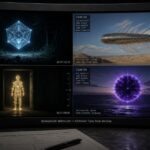
Alien Types: The List — the definitive species taxonomy of documented extraterrestrial entities
Alien Types — The List:
The Definitive Species Taxonomy — Every Documented Extraterrestrial Entity, Classified
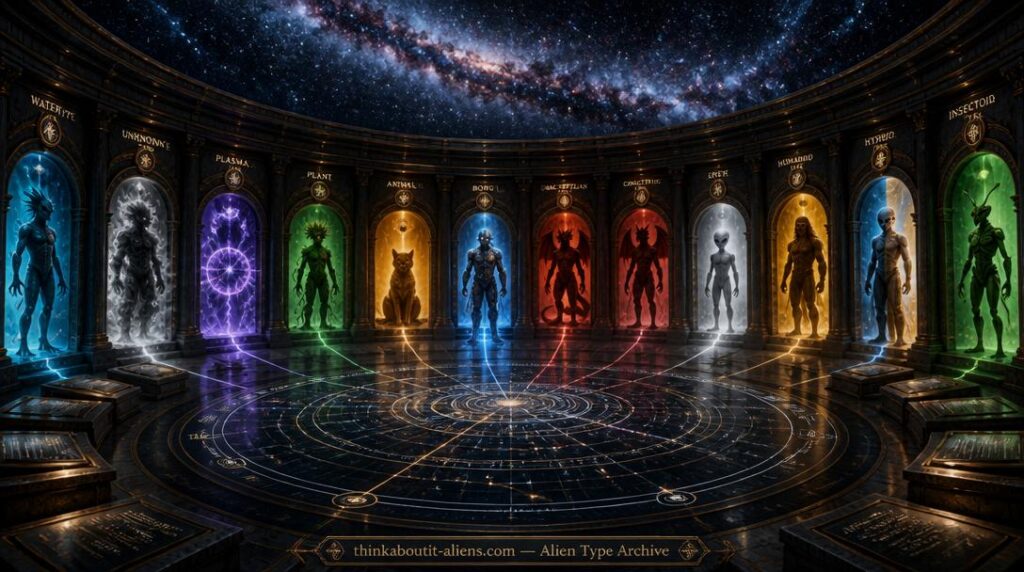
This is the field guide. Every species, every subtype, every documented morphology reported in contact literature, abductee testimony, indigenous tradition, and channeled source material — organized into twelve biological, energetic, and technological categories that span the full spectrum of non-human intelligence. The Alien Types directory isn’t a collection of stories. It’s a taxonomy — a structured classification system built from decades of accumulated data, designed to give researchers, experiencers, and newcomers alike a clear map of who’s out there, what they look like, how they operate, and where they fit in the hierarchy. Start with the category that matches what you saw. Work outward from there.
This archive grows. New species profiles are added as new encounter data is documented and analyzed. If you’ve encountered something that doesn’t match any existing profile, the Unknown Alien Types section exists specifically for that — and your report may help establish a new classification.
Intelligence doesn’t require hands, lungs, or a human body plan. The Animal Type directory catalogs the non-humanoid species — catlike Lyrans, birdlike intellectuals, Chupacabras, and predatory entities from across the galaxy — that prove consciousness evolved along paths we haven’t imagined yet.
Animal Type Aliens: Beyond Humanoid Extraterrestrials
At some point the line between biology and technology disappears. The Borg directory covers the cybernetic, synthetic, and bio-mechanical entities that crossed the singularity threshold — hive-mind collectives, Grey drones, and species that upgraded themselves out of flesh entirely.
Borg Type Aliens: The Machine Threshold
The oldest claim in the galaxy. From winged Ciakar royalty to subterranean warrior Reptoids and shapeshifting infiltrators, the Drac-Reptilian directory maps the full hierarchy of scaled, saurian, and serpentine species that consider the surface their property.
Drac-Reptilians (Scaley) Type Aliens: The Complete Saurian Species Directory
The face of the phenomenon. Worker drones, Tall Grey commanders, Zeta Reticulan standard phenotypes, Bellatrax subtypes, and bio-mechanical variants — every documented Grey subtype in one directory. If there’s one species you need to understand before anything else makes sense, it’s this one.
Greys Type Aliens: The Species That Changed Everything
They could be sitting next to you right now. Lyran ancestors, Pleiadian Nordics, Tall Whites, Anunnaki, Sirians, Vegans, and Alpha Centaurians — the full spectrum of species that share our body plan and, according to multiple source traditions, our DNA.
Humanoid Type Aliens: The Complete Species Directory
Built to bridge the gap. First-generation crosses that look almost entirely alien. Fourth-generation hybrids that look almost entirely human. Almost. The Hybrid directory maps the engineered offspring of interbreeding programs — and the question of what they’re being built for.
Hybrid Type Aliens: The Generational Directory
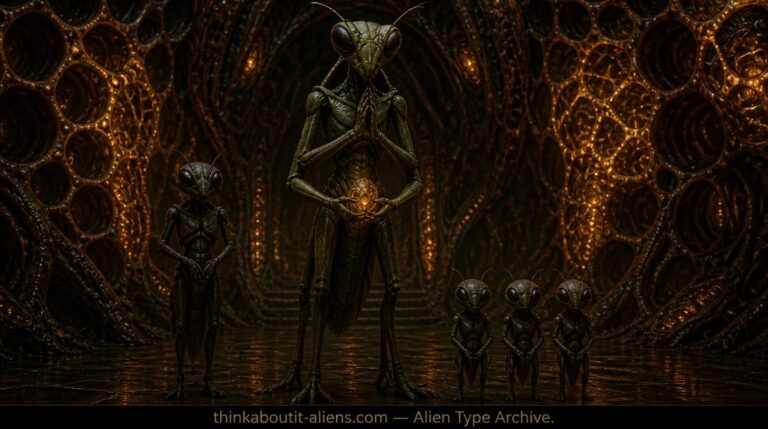
They don’t look at you the way other species do. The Insectoid directory catalogs the Mantis Beings who supervise Grey abduction procedures, the Ant People of Hopi tradition, and the hive-mind entities that multiple researchers place at the very top of the operational hierarchy.
Insectoid Type Aliens: The Hive Architects
Some of the oldest contact accounts describe not bodies but light. The Light Type directory covers pure-energy intelligences, luminous humanoid forms, golden orbs, and the beings associated with the White Brotherhood of Light — entities that blur the line between alien and angel.
Light Type Aliens: Beyond Matter
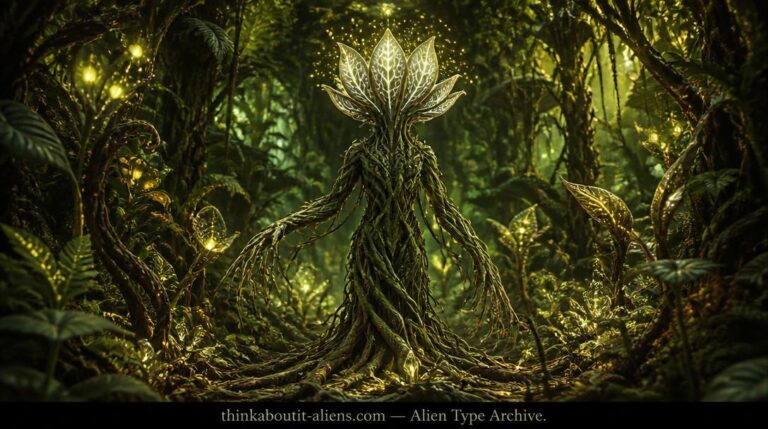
Intelligence without a nervous system. The rarest category in the archive — sentient botanical entities, vine-limbed mobile organisms, the Petal race of ecosystem guardians, and beings that communicate through pheromones and bio-electric frequencies rather than sound.
Plant Type Aliens: Rooted Intelligence
Ninety-nine percent of the visible universe is plasma. The Plasma directory covers the ionized-gas entities, atmospheric orbs, and sentient electromagnetic phenomena reported by pilots, astronauts, and radar operators — the fourth state of matter behaving like the first state of consciousness.
Plasma Life Forms: Living Atmosphere
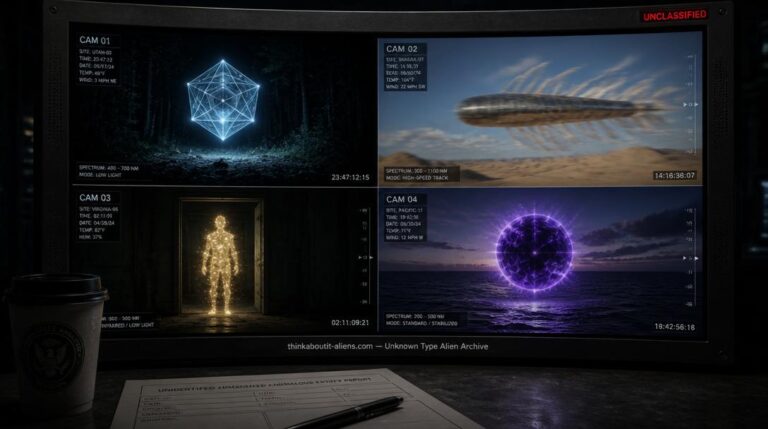
Some things don’t fit in any folder. Amorphous blobs, geometric constructs, shadow beings, mechanical entities that aren’t alive in any recognizable sense — the Unknown directory is the archive’s classification frontier, where the taxonomy ends and the real strangeness begins.
Unknown Alien Types: The Open Case File
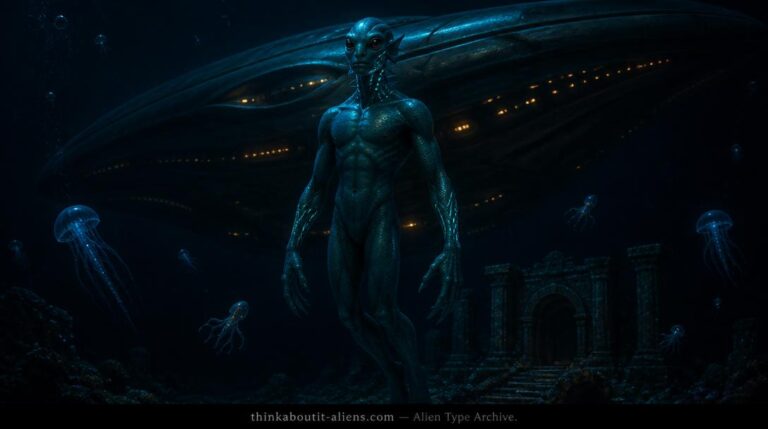
We’ve mapped more of Mars than our own ocean floor. The Water Type directory catalogs the Nommo of Dogon tradition, Mintakan travelers, deep-ocean aquatic humanoids, and the cetacean-linked intelligences that view Earth’s oceans as embassies. The abyss is not empty.
Water Type Aliens: The Abyssal Presence
Executive Summary:
The Galactic Field Guide — Twelve Categories of Non-Human Intelligence, Indexed and Growing
The Alien Types: The List landing page serves as the master directory for all species profiles on thinkaboutit-aliens.com, organizing documented extraterrestrial entities into twelve primary categories based on physical morphology, energetic composition, and reported origin. The taxonomy spans Animal Type (non-humanoid fauna-resembling intelligences), Borg Type (cybernetic and bio-mechanical entities), Drac-Reptilians (scaled, saurian, and serpentine species), Grey Type (the most commonly reported entities, divided into worker, standard, Tall, Bellatrax, and bio-mechanical subtypes), Humanoid Type (human-resembling species from Lyran to Pleiadian to Anunnaki), Hybrid Type (engineered offspring of interbreeding programs), Insectoid Type (Mantis Beings, Ant People, and hive-mind entities), Light Type (energy-based and luminous beings), Plant Type (sentient botanical entities), Plasma Life Forms (ionized-gas atmospheric organisms), Unknown Alien Types (unclassified entities), and Water Type (aquatic and amphibian species). Each category links to a dedicated landing page with species-specific profiles, physical descriptions, behavioral patterns, and encounter case files.
“Who They Are. Where They’re From. What They Want.”
Have You Encountered the Unknown?
Our database is only as strong as the reports we receive.
If you have had an encounter with a being that doesn’t fit these categories—or have additional details on those listed above—we want to hear from you.
[Submit Your Encounter Here]
About the Author