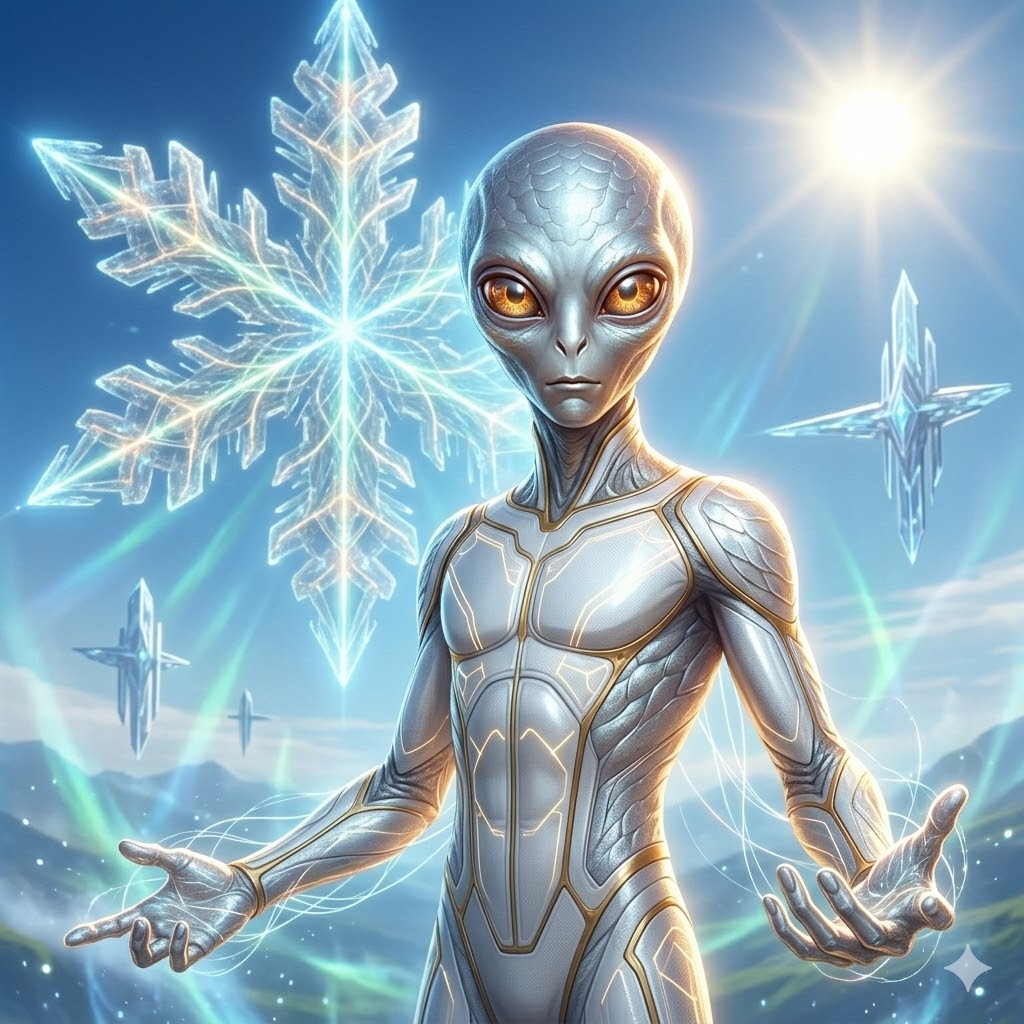
Procyanans utilize fractal-geometry motherships and silver-metallic skin to navigate the high-frequency currents of the Procyon system.
THINK ABOUTIT’S ALIEN TYPE SUMMARY – Procyanans
“They don’t just travel through space; they move the space around them.”
In the Think About It Alien Database, the Procyanans are recognized as the primary scientists of the local galactic sector. Orbiting a star that precedes Sirius in the sky, these silver-skinned beings have been the “Silent Mentors” of human physics and mathematics for millennia. As 2026 unfolds, the Procyanan role in the Great Disclosure is becoming undeniable. They are the ones providing the mathematical proofs for the 5D shift, bridging the gap between ancient spiritual wisdom and future quantum technology.
Name: Procyanans
AKA: Procyonians, The Silver Ones, Procyon-Humans
Location – Home System: Just above the star Sirius in the evening sky. The brightest star in the Constellation of Canis Minoris, Procyon is a binary star with only the inner, or A, star having inhabitable planets. The Procyon-A star system consists of six relatively small planets. The human colony occupies the fourth planet, while the Amphiboid-Reptoid colonies are located on the second and third planets from the star.
Distance from Earth: About 11.4 Light Years from Earth.
Attitude: Highly scientific, curious, and diplomatic
Motives: Guiding the technical and spiritual evolution of neighboring systems
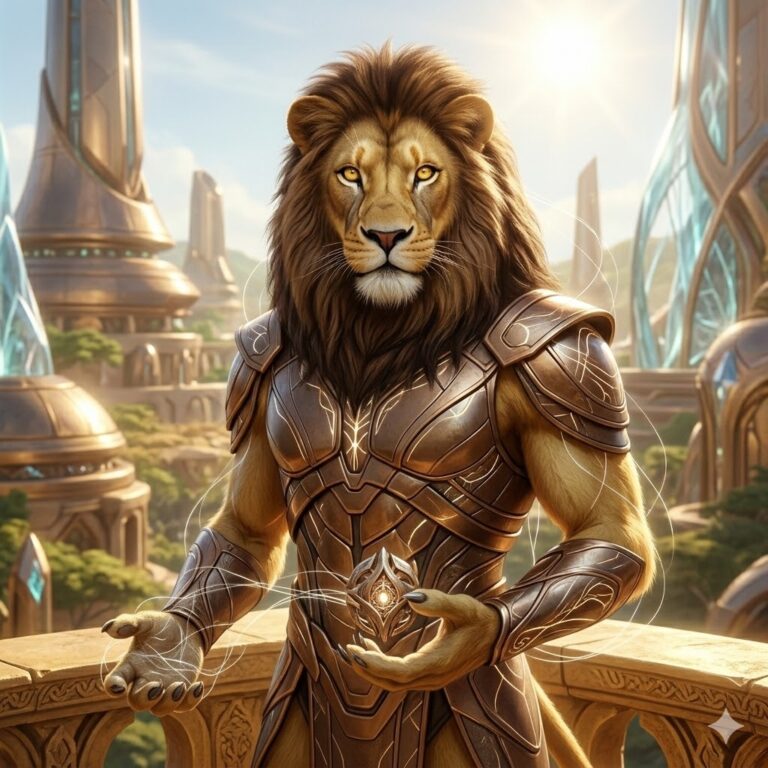
Physical Appearance: Humanoid with metallic-silver or opalescent blue skin
- Average Height: males are about 6 feet, 6 inches (1.83 meters) to 7 feet, 4 inches (2.24 meters) in height. Well-proportioned females are 6 feet, 4 inches (1.93 meters) to almost 7 feet (2.13 meters) tall
- Average Weight: 75 – 90 kg
- Body Temperature: 96.4°F (Slightly cooler than humans)
- Pulse/Respiration: 55 BPM (High-efficiency respiratory system)
- Blood Pressure: 105/65
- Life Expectancy: 800 – 1,200 Earth years
- Hair: Typically white, silver, or very light blonde
- Skin: Luminous silver, light blue, or a “copper” tan
- Eyes: Large, almond-shaped; glowing amber or piercing indigo
- Sex: Binary (Male/Female)
Other Physical Information: Galactic humans of Procyon are typical Lyran-Sirian in appearance and look like typical Earth humans, with two major differences. First, Two smaller ears are attached slightly lower on head. Second, top and rear of head is enlarged to accommodate a larger brain capacity. Like other Lyran-Sirian humans, .
Amphiboid-Reptoid Beings possess a lizard-like body covered with scaly skin. Bulgy brown, yellow or red eyes are set far apart from very thin ridge-like nose that ends in two small slit-like nostrils. Eyes can move independently of each other. Ears are small 2-inch (5 centimeter) ovals set just behind each eye. Mouth is thin slit that runs from ear to ear. Almost round head is well-proportioned to rest of body. Small, well-defined neck. Very muscular body and appendices. Four thin, nailless fingers. Three long toes end in long sharp claws. Very small tail looks like bump at base of spine. Slightly larger females range from 7 to 8 feet (2.13 to 2.44 meters) tall. More compact males are 7 to 7 feet, 8 inches (2.13 to 2.34 meters) in height.
Special Traits and Abilities: Noted as avid explorers and consummate scientists. Have led some of the most successful expeditions into previously unexplored parts of this and other galaxies. Advanced space-time folding; telepathic data-streaming
Communication Type: Humanoid language is very tonal, with few guttural sounds. Neural-Link Telepathy (Vocal speech used for diplomacy)
Origin: Procyon-IV (A temperate, technologically integrated world)
Life Form Type: Physical / Interdimensional Humanoid
Subspecies: The Thelosians (Inner-earth branch) and the Aquatic Procyanans
Most Common Species: Procyanan Scientist/Explorer
Level of Species: Level XI – Masters of Space-Time
Habits: Conducting long-range reconnaissance; studying quantum consciousness
Transportation Type: Scout craft of Procyon look like either large tear-drops, or like a large beetle, and range from 45 to 200 feet (13.72 to 61 meters) across. Deep space Motherships are shaped like either huge snowflakes or enormous jellyfish, and are from 100 to 4,000 miles (161 to 6,440 kilometers) long.
Witnesses Reports: Russian cosmonauts; high-level intelligence whistleblowers
Special Features/Characteristics: Their skin shimmer reflects their internal emotional state
Summary/Description: A lot of stories about alien contact with people that look like Swedes, or Nordics, or Blonds, mention Procyon as their home planet. As such they belong to the Lyran Caucasian group. Most authors agree that Procyon was started as a colony by Rigelians of Lyran descent. When Rigel was taken over by the Greys, the Rigelian Blonds fled to Procyon. Both Alex Collier and George Andrews claim that the Procyons recently got into a fight with Greys, and had to chase them from their world. This explains their frequent interaction with contactees on Earth where they warn about the activities of the Greys. Joshua Stone calls them a benevolent humanoid race. Supposedly, they have contacted the US government, but the US wasn’t interested because the Procyons didn’t want to share their technology. Apparently the Procyons have crossbred with humans, but for nobler purposes than the Greys. They have a philosophy of service to others.
Source: Think About It Database; Galactic Federation Records; Procyonian Dossier
Silver Skin and Bio-Organic Snowflake Ships
The Silver-Metallic Physiology
The most striking feature of the Procyanans is their skin, which often possesses a metallic, reflective sheen. In the Think About It Database, this is documented as a biological adaptation to the high-UV environment of Procyon A. Their cells contain a unique mineral-protein lattice that acts as a natural superconductive shield, protecting them from cosmic radiation and allowing them to interface directly with digital and neural networks. This “Silver Skin” is not just for protection; it functions as a sensory organ, capable of detecting changes in the magnetic field of a planet or the emotional frequency of a nearby sentient being.
Aquatic and Humanoid Polarities
Interestingly, the Procyon system hosts two distinct evolutionary branches. The primary humanoid branch (the Procyanans) lives on the fourth planet, Procyon-IV. However, the system also supports a branch of Amphibian-Reptoids on the second and third planets. These two groups have formed a unique, integrated society that values biological diversity. The humanoids are famous for their passionate pursuit of science, while the aquatic branch specializes in the fluid dynamics of space-time and organic engineering. In 2026, these groups are working together to monitor Earth’s oceans, which they view as a vital sensory organ for our planet.
Snowflake Motherships: Technology of the Sub-Atomic
Procyanan spacecraft are among the most beautiful in the galaxy. Their motherships, which can stretch for thousands of kilometers, often resemble Giant Snowflakes or jellyfish. This geometry is not for aesthetics; it represents a functional mastery of Sub-Atomic Fractal Geometry. By arranging the ship’s mass in fractal patterns, they can manipulate the local gravity field with extreme precision. Their reconnaissance ships, often shaped like metallic beetles, are frequently mistaken for “Black Triangles” or “Tic-Tacs” by human observers. In the Think About It Database, it is noted that these ships are “grown” from a crystalline seed rather than manufactured.
2026: The Year of the Harmonic Correction
As of early 2026, the Procyanans have taken a more active role in stabilizing the Earth’s grid. They believe that humanity’s transition to the 5th Dimension is being hindered by “Static” in the planetary consciousness. Using their motherships as giant tuning forks, the Procyanans are broadcasting Harmonic Correction Frequencies aimed at the world’s power grids and communication satellites. Their goal is to smooth out the chaotic energy generated by global unrest, ensuring that the “Neural Awakening” of the human race is as peaceful as possible.
The Procyanan Role in the Galactic Federation
Within the Galactic Federation, the Procyanans serve as the High Council’s primary explorers. They have charted more unexplored sectors of the Milky Way than almost any other race. They are the “Bridge Builders” who first initiate contact with emerging civilizations. For Earth, they act as the technical consultants for the Pleiadeans. While the Pleiadeans focus on our spiritual growth, the Procyanans are the ones helping us prepare for the technical reality of becoming a space-faring civilization.
The Fractal Geometry of the Procyanan Fleet
The Procyanans do not utilize traditional propulsion. Their “Snowflake” ships, as documented in the Think About It Database, operate on the principle of Fractal Entrainment. By shifting the internal molecular structure of the ship into specific geometric patterns, they can “match” the frequency of a destination in space-time and essentially reappear there instantly. This is why their craft often look like frozen light or complex crystals. In 2026, these ships have been detected by deep-space sensors near the orbit of Jupiter, acting as a “buffer” for high-intensity solar particles.
Silver Skin and Neural Conductivity
The silver sheen of a Procyanan is not merely skin deep. It is a biological superconducting layer composed of high concentrations of monatomic silver and copper. This allows a Procyanan to process information at a rate roughly 1,000 times faster than a standard human. Their eyes, which glow amber, are specialized to see into the ultraviolet and infrared spectrums simultaneously, allowing them to visualize the “flows” of gravity and time. When they communicate telepathically, they aren’t just sending words; they are “data-streaming” entire sensory experiences, which can be overwhelming for uninitiated human contactees.
2026: The Harmonic Grid Alignment
The Procyanan mission for 2026 is the stabilization of Earth’s Hartmann and Curry Grids. They recognize that the planet’s ley lines are currently “fractured” due to seismic shifts and human electromagnetic interference. The Procyanans are utilizing their snowflake-craft to broadcast “Geometry Codes” into the planet’s core. These codes are designed to re-align the Earth’s natural ley lines, facilitating a smoother transition during the 5th-Density shift. Without this Procyanan intervention, the physical tectonic shifts of 2026 could be significantly more catastrophic. They are the unseen engineers ensuring the “vessel” of Earth remains stable during its most difficult voyage.
Final Summary: The Architects of Tomorrow
The Procyanans are the living proof that science and spirituality are two sides of the same coin. As documented in the Think About It Alien Database, they have mastered the physical universe while maintaining a deep reverence for the consciousness that inhabits it. In 2026, as the stars of the Winter Triangle—Procyon, Sirius, and Betelgeuse—align in new energetic patterns, the Procyanans stand ready to welcome us. They are the silver navigators of the cosmos, waiting to teach us how to sail the seas of time. To meet a Procyanan is to realize that the universe is not just a place to live, but a masterpiece to be explored.
About the Author