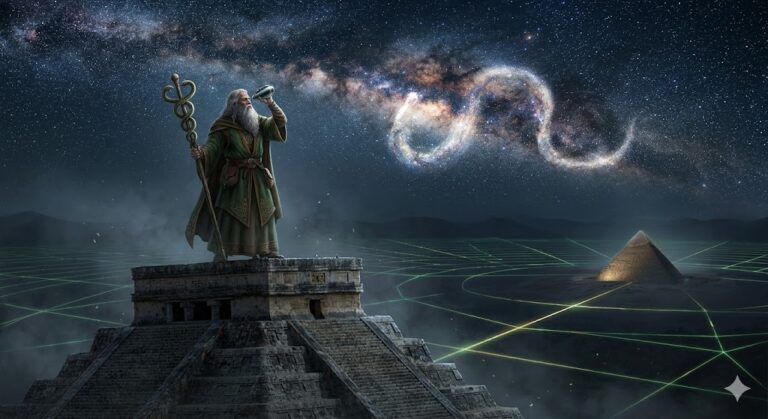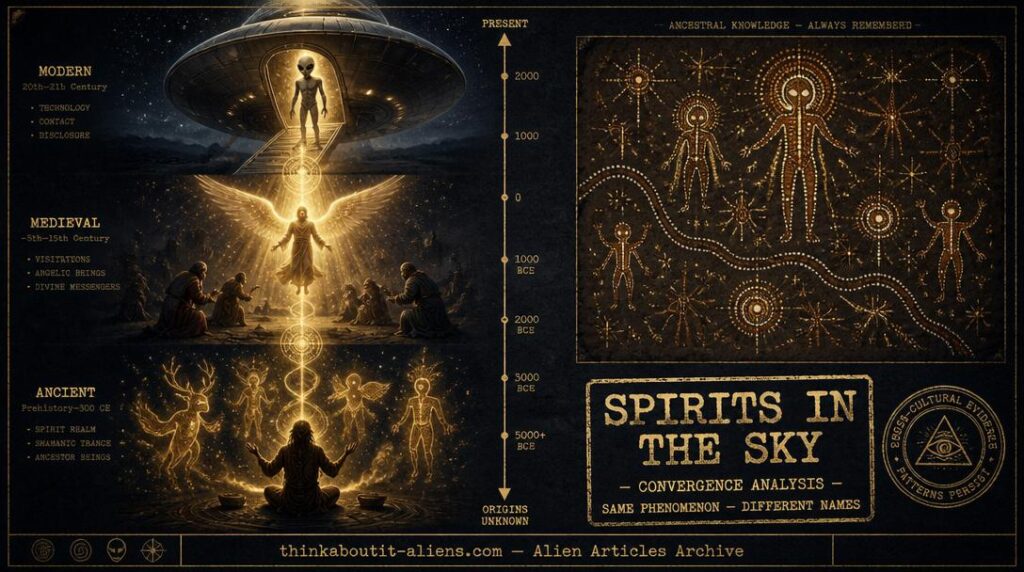
The convergence thesis — same phenomenon, different names: shamanic spirits, celestial messengers, and modern alien encounters connected across millennia.
Are UFOs and their occupants extraterrestrial visitors — or are they the same entities that ancient cultures called spirits, gods, and celestial messengers, simply reinterpreted through a technological lens? This article explores the convergence thesis: that the non-human intelligences reported in modern UFO encounters are the same beings described in thousands of years of shamanic, religious, and folkloric tradition, and that the shift from “spirit” to “alien” language is a cultural translation rather than a change in the phenomenon itself. Drawing from Aboriginal Australian Dreamtime accounts, Erich von Däniken’s ancient astronaut framework, shamanic encounter traditions across cultures, and comparative analysis of modern abduction reports against historical spirit-contact narratives, the article argues that the extraterrestrial hypothesis and the interdimensional/spiritual hypothesis are not competing explanations but descriptions of the same phenomenon from different cultural operating systems.
The article is particularly valuable for researchers who work across the boundary between ufology and consciousness studies. If the same entities have been interacting with humanity for millennia under different cultural names, then the modern UFO phenomenon is not a 20th-century development but a permanent feature of human experience — and the most productive research approach is not to choose between the ET and spirit hypotheses but to study the consistent features of the interaction across all cultural contexts. For anyone studying non-human intelligence as a unified phenomenon rather than a collection of separate fields (ufology, demonology, folklore, shamanism, parapsychology), this article provides the framing argument.
Could aliens be our ancestors?
A growing number of UFO cults think so, reports TORI SHEPHERD
18apr06
 ACROSS Australia, people are looking to the skies for a savior. Many people have seen objects in the sky that they could not identify, and many believe that we are not alone in the universe.
But there are also people who have built spiritual belief systems around the idea that aliens once came to Earth, and will return one day to take them away to a better place.
The Raelians, who had their “annual awakening seminar” earlier this month in Queensland, are a prominent group in Australia that believe aliens created them and will return.
These are most commonly referred to as UFO cults, the most infamous of which is Heaven’s Gate, whose 39 members committed suicide in 1997 in the hope that their souls would catch a ride to the Kingdom of Heaven on a passing spaceship. But Monash University sociology professor Gary Bouma said religions based on UFOs are an “exceedingly tiny fraction” of religious groups.
Professor Bouma, an expert on religion and society, said they were “one of the absolute fringes of spirituality“.
“It’s simply a tiny little group pursuing an esoteric idea. Life has been full of them, they’ve come and gone,” he said.
“They never stand up against the mainstream, for a whole variety of reasons.”
But since space travel began in the 1950s, the idea of extraterrestrials has taken hold of people’s imaginations.
Films like Close Encounters of the Third Kind and television series like The X-Files have made aliens and UFOs a part of popular culture.
There is even a predominant image of an alien – a small, grey creature with big, dark eyes.
And with new technology such as the internet, small groups can have a large and enduring presence.
The Raelians are one group that has used the internet to become a worldwide phenomenon. They have an international headquarters in Switzerland, and offices all over the world, from Afghanistan to Zimbabwe.
They claim there are up to 70,000 Raelians worldwide, with about 500 in Australia. A registered non-profit organization, their main aim is “to create peace on Earth“.
The group was founded in 1973 by Rael, a French journalist formerly known as Claude Vorilhon.
He said he had met extraterrestrials who told him to build an embassy to await their return to Earth.
He claimed they had created humanity and would return to elevate them to a higher evolutionary plane sometime before 2035. But members of many groups deny that the word “cult” applies to them, and would prefer to be called religions if anything.
This is a complicated idea. The High Court of Australia defines religion as “a complex of beliefs and practices which point to a set of values and an understanding of the meaning of existence“. By this definition, most groups with any organized spirituality should be referred to as religions.
The proliferation of magazines, books, and internet sites on the subjects suggests most groups referred to as “cults” are not just brainwashed followers of charismatic leaders, but diverse groups of people looking for spiritual guidance. The Raelians gained media exposure through their claims to have cloned humans, and they have also weighed into the Intelligent Design debate with their version of the origin of life. Roy Tyrrell is a “guide” with the Raelians – a position which he likens to being a priest.
He said the Raelians believe “that life . . . was a scientific creation“.
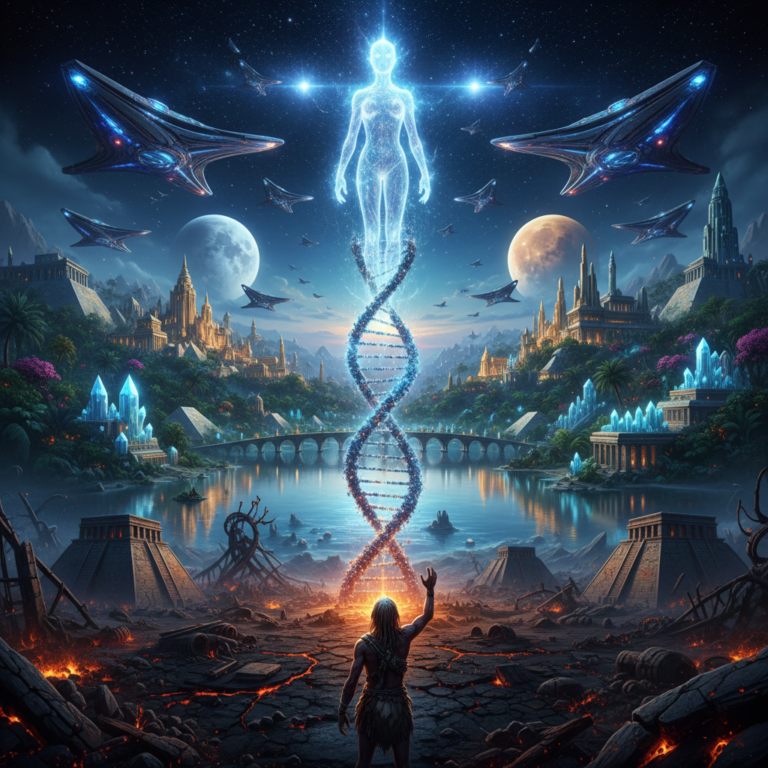
“We believe that beings, whom we call the Elohim (which translates as ‘those who come from the sky’) came to the planet, and with the synthesis of DNA they were able to create life.”
“They created man after their likeness, so we look like the Elohim,” he said.
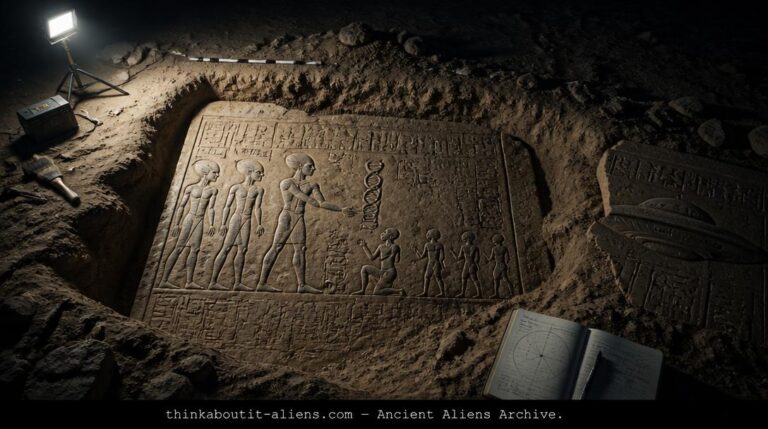
This theory of the origins of humanity is common in UFO cults and is often referred to as the Ancient Astronaut theory. Its most famous proponent was Erich Von Daniken, whose 1969 book Chariots of the Gods? Was God an Astronaut? was a bestseller.
Von Daniken argued that aliens were a hidden force behind the history of humankind, responsible for ancient civilizations. He suggests that once upon a time, there was a war between two worlds, and the defeated race concealed themselves on Earth.
These astronaut refugees then contacted the “feeble hominids” (our ancestors) and decided to help them.
So they mated with the hunter-gatherers and produced a superior race of human beings.
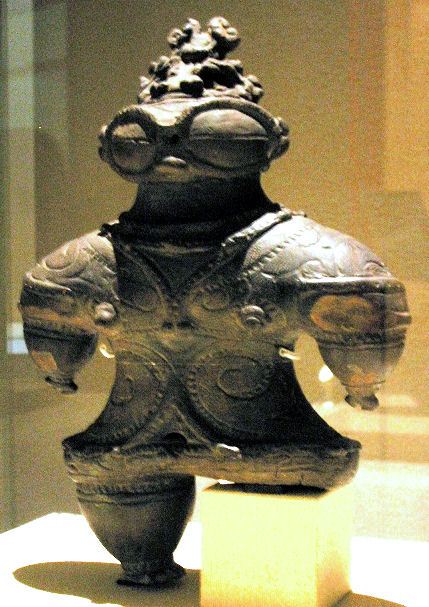
VON Daniken offered proof of his theory in the form of cave drawings that he claimed looked like astronauts, complete with helmets and spacesuits.
Mr Tyrrell said Von Daniken has “provided evidence of the existence of extraterrestrials doing things on the planet in the past”.
He said this supported the Raelians claim that the Elohim had been here.
Professor Bauma said that these extraterrestrial theories of the origins of life are “an interesting but trivial phenomenon”, although for some people they are “a way of making sense of the world around them”.
“Von Daniken said if you look at certain things a certain way they look a bit like astronauts,” he said. “I can’t imagine that he has any current credibility.”
He said that some people “seem to be vulnerable to some kinds of charismatic leaders”, and that people should be wary of people trying to convert them to unconventional religions.
Executive Summary: Spirits in the Sky — The Convergence Thesis, Shamanic Roots of UFO Encounters, and the Cultural Translation Model
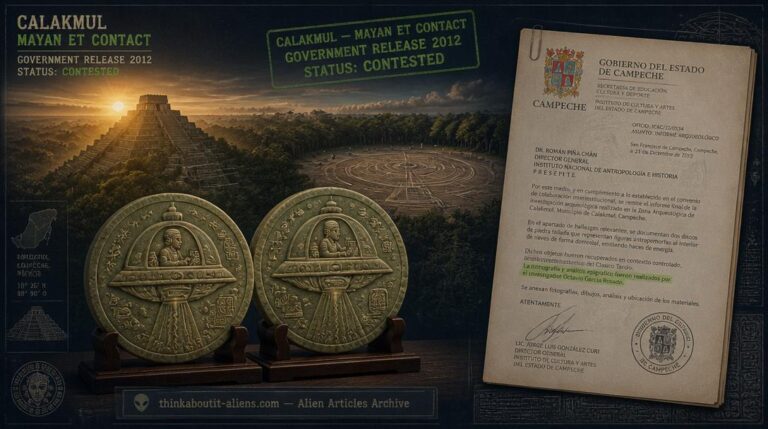
This article presents the convergence thesis: that modern UFO entities and ancient spirits/gods/celestial messengers are the same phenomenon described through different cultural operating systems. Evidence includes Aboriginal Australian Dreamtime accounts of sky-beings, shamanic encounter traditions paralleling modern abduction narratives, Erich von Däniken’s ancient astronaut architectural analysis, and comparative morphological and behavioral analysis showing consistent features across millennia of non-human intelligence encounters. The cultural translation model proposes that “spirit” and “alien” are era-specific labels for a single persistent phenomenon.
The article argues that the ET hypothesis and the interdimensional/spiritual hypothesis are not competing but complementary — and that the most productive research approach treats non-human intelligence as a unified phenomenon spanning ufology, shamanism, folklore, and parapsychology rather than artificially separating these fields.
“The question isn’t whether they’re aliens or spirits. The question is why we assume those are different things.”
About the Author