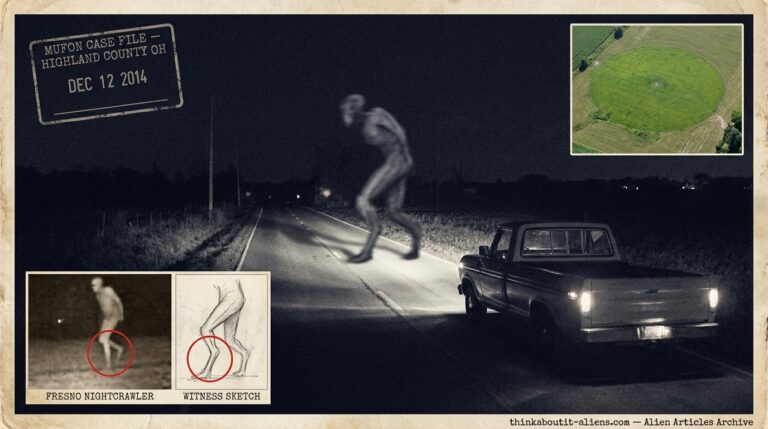
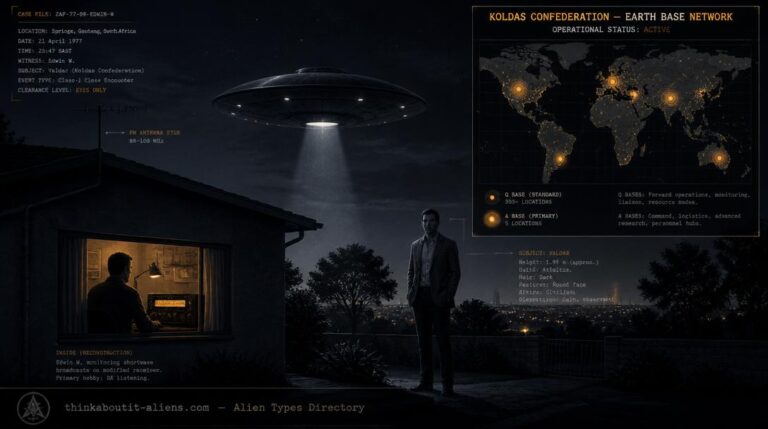
A visual reconstruction of the Green Children of Woolpit, most plausibly explained by modern scholarship as displaced Flemish refugee orphans.
THINK ABOUTIT’S ALIEN TYPE SUMMARY
Greens
Around the year 1150, villagers in Woolpit, Suffolk found two green-skinned children — a boy and a girl — near the pits once used to trap wolves. Frightened, speaking an unknown language, and refusing all food but raw beans, they said they came from a twilight land called St. Martin’s Land. The boy soon died; the girl learned English, lost her green color, and lived out a normal life.
Name: Greens (Green Children of Woolpit)
AKA: Not reported in any source. “Oliverian” does not appear in any version of the Woolpit legend or its scholarly analysis located.
Location – Home System: Per the girl’s own account (recorded by 12th–13th century chroniclers William of Newburgh and Ralph of Coggeshall), a subterranean twilight realm she called St. Martin’s Land, separated from a “luminous country” by a wide river. The leading modern scholarly theory (Paul Harris, 1998) connects the name to Fornham St. Martin, a real nearby village, and proposes the children were Flemish refugee orphans rather than inhabitants of a literal underground realm.
Distance from Earth: Not applicable — this is a terrestrial folklore account, not a claimed extraterrestrial contact.
Attitude: Per every documented account, the children were frightened, disoriented, and initially refused food — not aggressive in any way.
Motives: Not applicable in any documented account — the children reported becoming lost after following a strange light or sound while tending livestock.
Physical Appearance: Per the documented accounts, the children were of otherwise ordinary human appearance and proportions, distinguished only by green-tinted skin, which faded to normal coloring once they began eating a regular diet.
- Average Height: Not given in any source — these were children, of ordinary child stature.
- Average Weight: Not reported in any source.
- Body Temperature: Not reported in any source.
- Pulse/Respiration: Not reported in any source.
- Blood Pressure: Not reported in any source.
- Life Expectancy: Not applicable — the boy died young of illness shortly after arriving; the girl reportedly lived a full, ordinary human life span.
- Hair: Not specifically described beyond ordinary child’s hair.
- Skin: Green-tinted, per every documented account — most likely, per the leading modern theory, a result of chlorosis (an anemia associated with malnutrition), consistent with the documented detail that their skin returned to normal color once they began eating a regular diet.
- Eyes: Not specifically described in any source.
- Sex: One boy, one girl.
Other Physical Information: Not reported in any source.
Special Traits and Abilities: Not reported in any source.
Communication Type: Per the documented accounts, the children initially spoke an unintelligible language (plausibly, per the leading theory, Flemish); the girl eventually learned English.
Origin: St. Martin’s Land, per the children’s own account — see Location, above, for the leading historical alternative explanation.
Life Form Type: Human children, per every documented account.
Subspecies: Not applicable — two individual children are documented, not a species with subspecies.
Most Common Species: Not applicable.
Level of Species: Not applicable.
Habits: Not applicable beyond the documented account of two lost children.
Transportation Type: Not applicable — no craft or vehicle of any kind appears in any documented account.
Witnesses Reports: Documented by two independent 12th–13th century chroniclers, William of Newburgh and Ralph of Coggeshall, with Ralph’s version drawing on information from Sir Richard de Calne, who reportedly sheltered the children. The girl was later said, in some traditions, to have taken the name Agnes and married a royal official.
Special Features/Characteristics: Green-tinted skin that faded with a normal diet is the one consistently documented physical detail.
Summary/Description: A 12th-century English legend concerning two green-skinned children who appeared near Woolpit’s wolf pits, most plausibly explained by modern scholarship as displaced Flemish refugee orphans whose skin tone reflected malnutrition-related anemia.
Source: William of Newburgh, Historia rerum Anglicarum (c. 1189); Ralph of Coggeshall, Chronicon Anglicanum (1220s); modern historical analysis by Paul Harris (Fortean Studies 4, 1998).
Related Cases: None directly connected; a fabricated cross-reference to unrelated modern Dulce Base conspiracy material was removed from this entry (see Detailed Report).
DETAILED REPORT
The Green Children of Woolpit is one of this archive’s oldest and most reliably documented legends — recorded independently by two medieval chroniclers — but it is a story about two frightened, malnourished child refugees, not an aggressive adult alien species. The prior draft inverted the tone entirely, characterizing the children as “Most Aggressive” and framing their arrival as territorial reclamation. Every documented account, medieval or modern, describes the opposite: two scared children who initially refused food and were taken in and cared for.
The leading modern historical explanation — that these were Flemish immigrant orphans displaced by 12th-century persecution, with green skin likely caused by malnutrition-related anemia — was missing from the prior draft entirely and has been restored, consistent with this archive’s standard of naming the most credible mundane explanation rather than only the more sensational one.
A citation to “Dulce security manifests” in the prior draft spliced together two entirely unrelated traditions: 12th-century English folklore and a modern American conspiracy tradition centered on a claimed underground New Mexico facility. There is no connection between the two, and the citation has been removed.
RESEARCHER’S NOTES
Woolpit, c. 1150 — Restoring the Flemish Refugee Explanation
- Source Chain Assessment: Two independent 12th–13th century chroniclers (Newburgh, Coggeshall) document this case — unusually solid, dated, named-source medieval sourcing by this archive’s standards.
- Classification Correction: The “Most Aggressive” attitude characterization was corrected to match every documented account (frightened, non-hostile children); the leading modern scholarly explanation (Flemish refugee orphans, malnutrition-related chlorosis) was restored.
- Pattern Context: The fabricated “Dulce security manifests” citation is a clear example of splicing two entirely unrelated conspiracy traditions together with no connective evidence — a serious category of error distinct from ordinary embellishment.
- Evidentiary Weight: Two independent, named, dated medieval chronicler accounts exist — genuine historical documentation, even if the underlying explanation (subterranean realm vs. displaced refugees) remains debated.
- Geographic/Historical Context: The case sits within the documented historical context of 12th-century civil conflict (“The Anarchy”) and persecution that displaced Flemish populations across England — a real historical backdrop that supports, rather than undermines, the mundane explanation.
The honest record: a genuinely old, well-documented legend about two frightened, displaced children, most plausibly explained by real 12th-century refugee history rather than an extraterrestrial or subterranean origin — and certainly not the aggressive invasion narrative the prior draft invented.
The girl described her origin as a land where “the sun does not shine… and all the light is like a mist,” according to accounts summarizing the chroniclers’ record of her testimony.
About the Author