The extraterrestrial lineage hypothesis — alien species code embedded in human DNA, connected to Pleiadian, Sirian, Lyran, and Anunnaki star systems of origin.
Have you ever experienced an inexplicable homesickness for a place you have never been? According to the extraterrestrial lineage hypothesis explored in this article, that feeling may not be psychological — it may be genetic. Drawing primarily from Zecharia Sitchin’s translations of Sumerian cuneiform texts and the broader ancient astronaut framework, this piece examines the claim that Homo sapiens is not a product of unguided evolution but a deliberately engineered hybrid species — a “Cosmic Library” containing the biological blueprints of dozens of alien races, with the Anunnaki of Nibiru serving as the primary genetic architects. Sitchin’s core thesis — that a rogue planet on a 3,600-year elliptical orbit collided with the proto-planet Tiamat to form Earth, and that the technologically advanced inhabitants of Nibiru subsequently modified primate DNA to create a worker species — is presented alongside the starseed identification framework that has emerged from Pleiadian, Sirian, and Lyran contact literature.
What makes this article a useful entry point for researchers new to the lineage concept is its integration of multiple identification streams: physical markers (including the RH-Negative blood type anomaly, which cannot be traced to any known primate ancestor), emotional and psychological starseed traits (the persistent sense of not belonging, heightened empathy, resistance to authority structures), and the Sitchin cosmological framework that positions Earth itself as the product of a planetary collision engineered or exploited by Nibiru’s inhabitants. Whether the extraterrestrial lineage thesis is understood literally as genetic engineering by non-human intelligence or metaphorically as an archetypal framework for understanding human alienation and longing, this article provides the foundational reference points — Nibiru, the Anunnaki, Marduk, Tiamat, and the starseed identification model — that underpin the entire field.
Do You Belong to an Extraterrestrial Lineage?
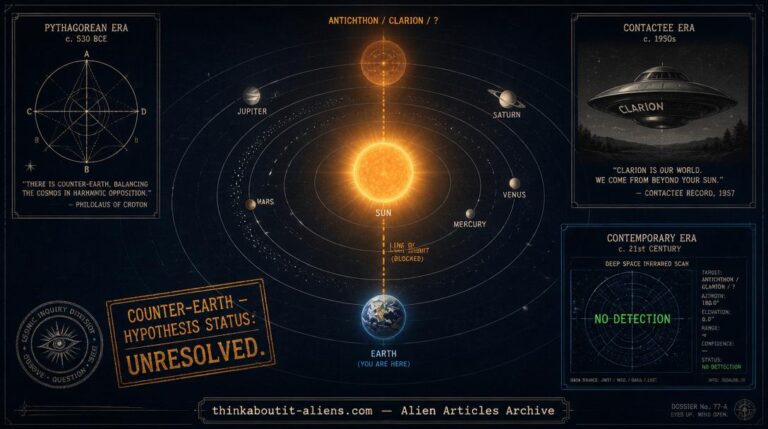
According to Sitchin’s interpretation of Mesopotamian iconography and symbolism, outlined in his 1976 book The 12th Planet and its sequels, there is an undiscovered planet beyond Neptune that follows a long, elliptical orbit, reaching the inner solar system roughly every 3,600 years. This planet is called Nibiru (although Jupiter was the planet associated with the god Marduk in Babylonian cosmology).
SOURCE
Executive Summary:
Extraterrestrial Lineage — The Nibiru Collision, Anunnaki DNA Engineering, and the Starseed Identification Framework
This article presents the extraterrestrial lineage hypothesis through two converging frameworks. The first draws from Zecharia Sitchin’s interpretation of Sumerian texts: the planet Nibiru, orbiting on a 3,600-year elliptical path, collided with the proto-planet Tiamat to form Earth and the asteroid belt. Nibiru’s inhabitants — the Anunnaki, led by the god Anu — subsequently arrived on Earth and genetically modified primate species to create Homo sapiens as a worker race. Sitchin notes that the Babylonian ruler Marduk co-opted the Nibiru creation narrative by replacing the planet’s name with his own, creating lasting confusion in the source texts. The article connects this framework to the broader ancient astronaut thesis: that the gods of Mesopotamian, Egyptian, and other ancient mythologies were not supernatural beings but technologically advanced extraterrestrials whose genetic engineering programs produced the human species.
The second framework is the starseed identification model — a set of physical, emotional, and psychological markers that proponents use to identify individuals carrying extraterrestrial genetic signatures. Physical indicators include the RH-Negative blood type (which lacks the Rhesus monkey protein found in all other primate blood and has no known evolutionary origin), unusual sensitivity to light and sound, and atypical body temperature regulation. Psychological indicators include persistent feelings of not belonging on Earth, unexplained homesickness for unknown locations, heightened empathy, resistance to hierarchical authority, and an intuitive sense of having a mission or purpose that transcends conventional human life goals. The article positions these traits not as pathology but as potential evidence of a galactic genetic heritage — the residual code of Anunnaki, Pleiadian, Sirian, or Lyran ancestors expressing through contemporary human biology and consciousness.
“Are you an ‘Earth Native,’ or are you a traveler from the stars? For those who have always felt like ‘misfits’ in modern society, the answer might lie in their DNA.”
About the Author