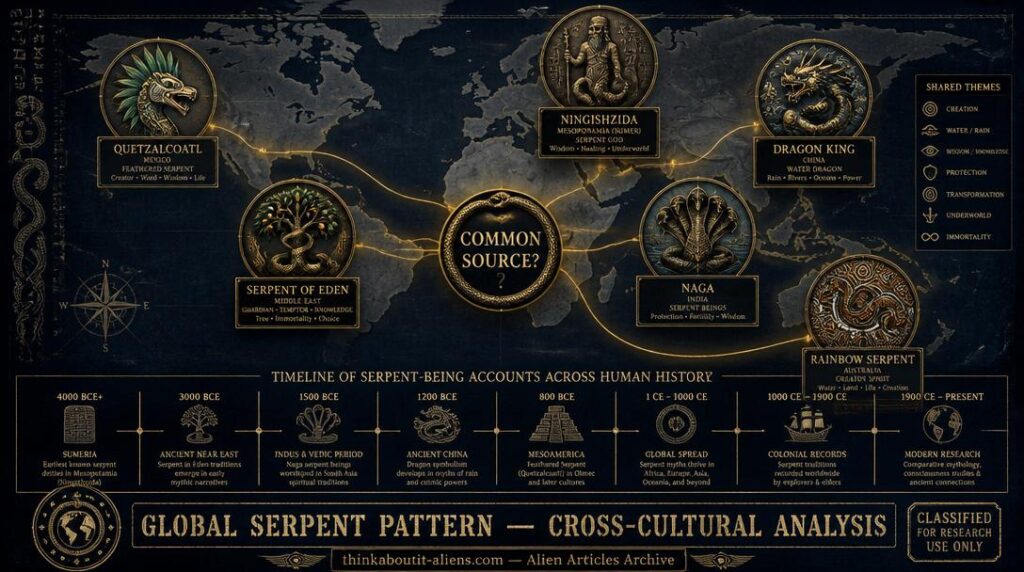
The global serpent pattern — six independent cultural traditions of intelligent serpent beings connected across continents and millennia.
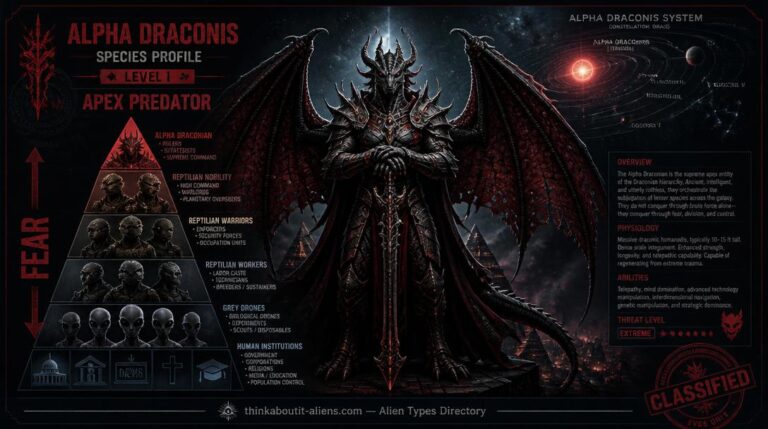
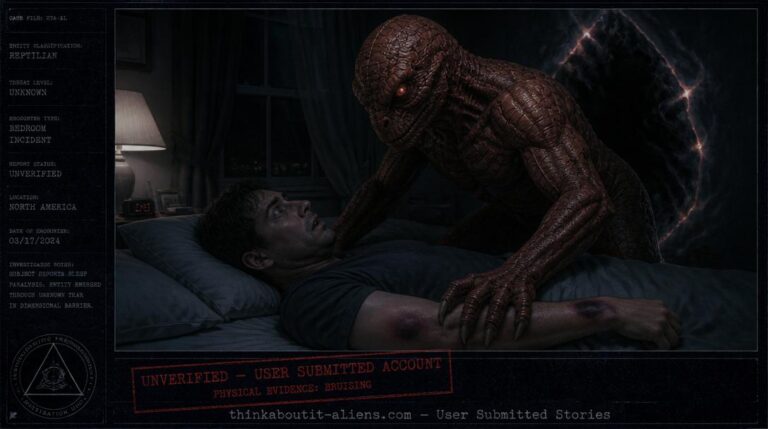
Every major civilization in human history worshipped, feared, or recorded encounters with serpent beings — and the consistency of these accounts across cultures that had no contact with each other is one of the most underexamined patterns in comparative mythology. This article traces the Reptilian presence through global religious and mythological traditions: from the Sumerian Anunnaki and the Nagas of Hindu and Buddhist cosmology, through the feathered serpent Quetzalcoatl of Mesoamerica, the Dragon Kings of Chinese mythology, the serpent in the Garden of Eden, the Djinn of pre-Islamic Arabia, the Rainbow Serpent of Aboriginal Australian Dreamtime, and the Hopi legend of the “Snake Brothers” who went underground. What emerges is not a collection of unrelated folk tales but a remarkably coherent cross-cultural portrait of an intelligent reptilian species — sometimes beneficent, sometimes predatory, almost always associated with underground realms, forbidden knowledge, and the manipulation of human civilization at its earliest stages.
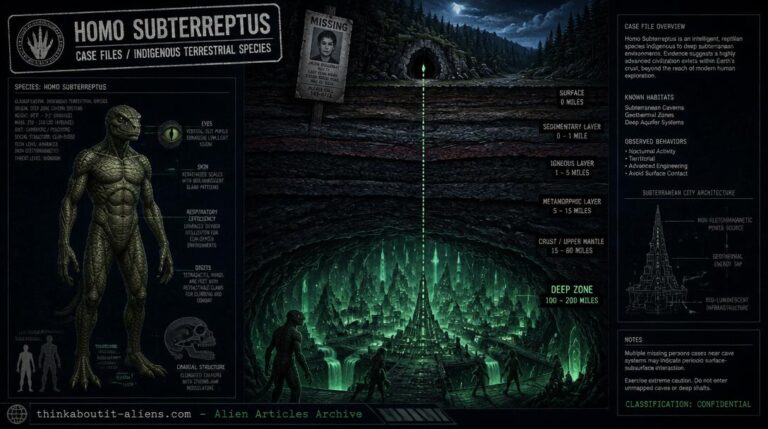
The article positions this mythological pattern as the historical evidence base for the modern Reptilian hypothesis: that the serpent beings described across global mythology are not metaphors or archetypes but references to an actual species — the Drac-Reptilians documented elsewhere in the Think About It species taxonomy. The Naga traditions are particularly significant: Hindu and Buddhist texts describe an advanced subterranean civilization of serpent beings with shapeshifting capability, technological sophistication, and a complex political relationship with surface humanity that includes both alliance and hostility. For researchers studying the Reptilian species category, this cross-cultural mythology survey provides the deepest historical foundation available.
Reptiles/Serpents/Lizards in History/Mythology/Religion
The bible frequently refers to demons and devils as serpents or serpentine creatures which live within the earth (stating the obvious).
Ancient Hebrew religious texts refer to the serpent of the garden of Eden as “Nachash”, which many Hebrew scholars contend was a bipedal or hominid reptile of great intelligence. Consider why a serpent would be the biblical animal in Genesis that tempted Eve.
It is also known through studies of evolution that the limbs of many reptile species atrophied over time, as the creatures lost the need for them. The bible speaks SPECIFICALLY of how the serpent from the garden was cursed to crawl upon it’s belly AFTER it’s actions with the Adamic race. That would obviously indicate that the infamous serpent of the garden walked upright!
From earliest days, the serpent symbol is to be seen in many parts of the world, but undoubtedly the most fascinating portrayal is a detail on an Egyptian “magical” papyrus in the British Museum depicting a serpent encompassed by a ray-emitting disk.
Old Testament: NUMBERS 21:6: “And the Lord sent fiery serpents among the people, and they bit the people, and much people of Israel died.”
(What is a fiery serpent???) Nagas are from ancient Indian mythology. They are described as humanoid lizards or serpents. In the earliest works they ranked with gods, but later they got demonized. They were not originally considered hostile to “mortals”. This is from texts 10 to 15 thousand years old. In those days even mortals could come and go between “heaven” and Earth. But when the gods withdrew from the affairs of man the Nagas retreated to great underground cities where they guard their privacy. Quetezecoatl was the feathered serpent of South American fame. He was a culture bearer and law giver. He is sometimes depicted flying on a rocket!
SERPENTS in CELTIC MYTHOLOGY: Serpents and dragons appearance was always followed by strife and infertility.
SERPENTS IN THE GNOSTIC TEXTS: There are three powers: the High God, who is most powerful; Elohim, the male God and co-creator with his female partner; and Edem/Eden, the goddess associated with the Earth, half maiden and half serpent, who creates the cosmos with Elohim.
Sint Holo (Sint-holo):excerpted from http://www.pantheon.org/mythica/articles/s/sint_holo.html by Gerald Musinsky
Sint Holo is an invisible, great horned serpent, having spiritual and cultural significance among the Cherokee, Chickasaw, Choctaw and adjacent tribes. This “snake” might reveal its presence to any male youth who had demonstrated a marked degree of wisdom or intelligence beyond his peers. According to certain but vague accounts, Sequoya, regarded as the primary inventor and developer of the Cherokee written language, “must have seen Sint Holo, the horned reptile” in order to create the alphabet for the Cherokee. Deep in a cave below the water, Sint Holo dwelled. He brought on heavy rains and could make a noise like thunder but could not make thunder, like the Thunderer spirit, its enemy. Only to those who showed they were wiser than the others, would he show himself and offer his old wisdom.
American Indians: The American Indians have a creation legend that says they came out of caves underground while the ‘reptile people’ were banished to underground.
On July 14th, 1974 an article by Stoney Brakefield appeared in the Pennsylvania newspaper, NEWS EXTRA, reporting an incident which allegedly took place in 1944 near this small coal mining town. A mining inspector and a fellow investigator had been called upon to examine a mining cave-in. About fifteen men had been killed in the incident. When they arrived and began to dig, they almost immediately uncovered the first body beneath debris that should not have been sufficient to kill the man. Laceration marks — as though from claws — were found all over the corpse. Similar marks were found on many of others and some of the bodies could not be located. Apparently the mining inspectors dug through the debris and began to follow a passage for about a half mile in search of the other men. Eventually they came to a room which seemed to be the end of the shaft. At this point, far up the tunnel behind them, there was another cave-in. A follow up team was immediately sent in to find the inspectors. When the inspectors were located, they were horrified and told of an encounter with a single reptilian being (humanoid) within the room who appeared very threatening to the men before disappearing via unclear means (as if giving a warning to “stay out”, much to the terror of the men involved). Hitler was fond of drawing a reptilian humanoid and even tried to publish a book in 1909 around it. From his works, including Mien Kampf, he mentions meeting with “supermen” in underground bases and that their eyes “were fierce and I was afraid”.
Facts of Interest: What are some common characteristics of a terrestrial reptile?
BODY TEMPERATURE: In cold-blooded animals, such as reptiles, frogs, and fish, body temperature varies with the surrounding temperature. The temperature of cold-blooded animals is always maintained slightly below the outside temperature. A variable thermal environment is crucial for good health, periods of torpor are acceptable, and frequent feeding is not necessarily imperative. Most reptiles also rely substantially on chemosensory information in dealing with their environments. Since the body temperature of reptiles changes with the temperature of the outside air, they have developed habits to help them control body warmth. On hot afternoons many reptiles can be found in the shade, trying to keep from getting too hot. Different reptiles have different optimum temperatures. This means that each kind of reptile has a particular temperature that it likes best. Summer hibernation is called estivation.Reptiles that live in very hot places often estivate.
TONGUES: Many reptiles, but especially lizards and snakes, have well-developed tongues that are used for different purposes.
DIET: Most reptiles are carnivorous–that is, they may catch live prey or scavenge on dead animals. A few lizards and turtles are herbivorous as adults
GLANDS IN LOWER JAW: Lizard venom glands are located in the lower jaw.
DOUBLE CHIN (dewlap): Dewlap, in reptile anatomy, a hanging fold of skin under the neck, i.e. like a double chin.
SHED SKIN IN PATCHES: Lizards, crocodilians, and turtles shed their scales individually or in patches.
HEARTS: The reptile heart has the same function as the mammal heart: it pumps blood. The reptile heart and the mammal heart also have the same basic structure. One part of the reptile heart pumps blood through the lungs, and the other part pumps blood through the rest of the body. In a heart with three chambers, blood with oxygen mixes with blood that does not have oxygen. This means that the cells and brain of a body with a three-chambered heart get less oxygen.
SENSES: Different reptiles have extremely fine-tuned senses. In some cases, it may be vision, in others, taste (they taste the air around them), etc.
REPRODUCTION ANOMALIES: Certain species of female reptiles are known to be able to get pregnant and bear healthy children regularly, even without the presence of ANY male reptiles around to fertilize them. Although most reptiles lay eggs, from which the babies hatch outside the mother, certain species of reptiles carry the eggs inside their body, so that when the eggs hatch, they are hatching from within the mother, and emerging from the mother, in a similar fashion to mammalian babies.
Executive Summary:
Reptiles and Serpents in History — The Global Serpent Pattern from Sumer to the Dreamtime
This article surveys serpent-being mythology across every major world civilization, documenting a consistent cross-cultural pattern: intelligent reptilian entities associated with underground realms, forbidden knowledge, genetic manipulation, and the founding or corruption of human civilization. Key traditions include the Sumerian Anunnaki (described in cuneiform as creator-gods with serpentine attributes), the Hindu-Buddhist Nagas (an advanced subterranean serpent civilization with shapeshifting capability), Quetzalcoatl (the feathered serpent deity of Mesoamerican civilization), the Chinese Dragon Kings (rulers of underwater and underground kingdoms), the Genesis serpent (the knowledge-bearer who altered humanity’s trajectory), and the Hopi Snake Brothers (who descended underground and established a parallel civilization).
The article’s central thesis is that these independently arising traditions describe contact with the same species — and that the modern Reptilian hypothesis is not a 20th-century invention but a rediscovery of humanity’s oldest and most universal non-human intelligence tradition. The consistency of key attributes across cultures (underground habitation, shapeshifting, knowledge-bearing, genetic involvement with humanity) exceeds what cultural diffusion or Jungian archetype theory can adequately explain.
“Every major civilization in human history recorded encounters with serpent beings — and the consistency of these accounts across cultures that had no contact with each other is one of the most underexamined patterns in comparative mythology.”
About the Author